What Is Vintage Clothing? A Beginner’s Guide
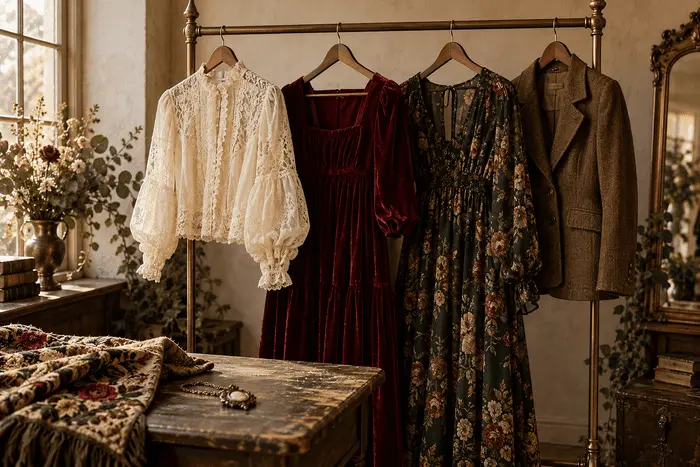
A flowing velvet dress, an embroidered blouse, a beautifully worn leather jacket—some clothes catch your attention because they feel different from everything around them. Their appeal might come from an unusual silhouette, a distinctive fabric, or details you rarely find in modern shops.
Welcome to the world of vintage clothing.
Vintage clothing generally refers to garments made at least 20 years ago. However, understanding vintage fashion involves more than counting years. A garment’s origin, construction, condition, and relationship to the period in which it was made all help tell its story.
Whether you love romantic lace dresses, witchy layers, or the dreamy mood of whimsigoth fashion, this beginner’s guide will help you understand vintage clothing, shop more confidently, and make older pieces part of your everyday wardrobe.
What Does Vintage Clothing Mean?
Vintage clothing is clothing produced in an earlier era, commonly understood as being at least 20 years old. It can include everyday garments, handmade pieces, occasionwear, designer fashion, and accessories.
The 20-year threshold is a useful convention rather than a universal definition applied identically everywhere. Etsy, for example, explicitly requires items sold as vintage on its marketplace to be at least 20 years old.
Importantly, a garment does not need to come from a famous designer to be vintage. An unbranded skirt or a carefully preserved homemade dress can qualify based on its age.
Vintage also describes when something was made, rather than one particular look. A minimalist slip dress and a dramatic puff-sleeve blouse can both be vintage, even though their styles are very different.
Vintage, Retro, Secondhand, and Vintage-Inspired: What Is the Difference?
These terms often appear together, but they describe different things. Knowing the distinction makes online shopping much easier.
| Term | What it describes | Example |
|---|---|---|
| Vintage | An older garment, commonly at least 20 years old | A dress originally made in the 1990s |
| Retro | A look that references an earlier period; the term alone does not establish age | A newly made outfit with a 1970s aesthetic |
| Secondhand | A garment that has previously been owned | A modern jacket resold by its first owner |
| Vintage-inspired | A newer garment designed with details drawn from older fashion | A newly produced lace dress with Victorian-inspired sleeves |
| Antique | A term commonly used for items around 100 years old or older | An early twentieth-century garment |
A secondhand dress might be only two years old, so previous ownership does not automatically make it vintage. Equally, an unworn garment can still be vintage if it is old enough.
This distinction matters when browsing romantic or alternative clothing. Lace, corset-style details, and dramatic sleeves can create a historical mood, but those features alone do not establish a garment’s age.
Does Vintage Clothing Have to Be Used?
No. Some vintage garments have never been worn.
You may encounter the term deadstock, often used for older stock that remained unsold or unworn. Etsy notes that sellers describing deadstock as vintage should still be able to explain how they established its age.
Unworn does not necessarily mean flawless. Storage can affect fabric, elastic, fastenings, and color over time. Whether a piece is pre-owned or unworn, its current condition deserves careful attention.
Why Wear Vintage Clothing?
People are drawn to vintage fashion for different reasons. Some enjoy discovering unusual pieces, while others appreciate the connection to earlier styles or the freedom to dress outside a single contemporary aesthetic.
Distinctive Details
Older clothing can introduce details that are difficult to find in your usual shops: decorative buttons, intricate embroidery, unusual collars, or an especially beautiful print.
A single piece can become the starting point for an entire outfit. An embroidered blouse might bring interest to plain trousers, while a velvet skirt can change the mood of a simple knit.
A More Personal Wardrobe
Vintage clothing gives you room to experiment with different periods and proportions.
You might combine a romantic blouse with modern denim, wear a long skirt with chunky boots, or pair a tailored jacket with a soft slip dress. Your wardrobe can develop around the pieces you enjoy wearing rather than matching one era from head to toe.
Appreciation for Construction
Some vintage garments feature thoughtful tailoring, generous seam allowances, full linings, or carefully finished details.
However, age alone does not guarantee quality. Older clothing was produced at many price points, just as clothing is today. Examine the actual garment rather than assuming every vintage piece is exceptionally well made.
Continued Use of Existing Clothing
Choosing clothing that already exists can help keep wearable garments in use. Repairing and wearing a piece repeatedly gives it a practical purpose beyond its original owner.
A useful approach is to buy items you genuinely expect to wear, rather than collecting pieces simply because they are described as vintage.
How to Identify Vintage Clothing
Dating a garment usually means considering several clues together. A label, fastening, or fabric may offer useful information, but a single feature rarely proves an exact production date.
Examine Labels and Branding
Look for brand labels, care instructions, size tags, and any manufacturing information.
Older logos and label designs may help narrow down a production period when compared with reliable brand records or dated examples. However, a missing label does not automatically mean a garment is very old.
Labels can also be removed, replaced, or carried over between production years.
Look Closely at Construction
Inspect the inside as well as the outside.
Seam finishes, linings, hems, closures, and evidence of alterations can help you understand how a garment was made and changed over time. Remember that a replaced zipper or repaired seam may be newer than the garment itself.
Consider the Overall Design
Silhouette, sleeve shape, neckline, print, and fabric can suggest a period. Yet fashion repeatedly revisits earlier ideas.
A newly made dress may closely resemble an older design, so visual style works best as a clue alongside other evidence.
Ask the Seller Specific Questions
Useful questions include:
- What period is the garment believed to be from?
- What information supports that estimate?
- Are photographs of the labels and interior available?
- Has the garment been altered or repaired?
- Are there any flaws that are difficult to see in the photographs?
Clear descriptions are more helpful than vague claims such as “authentic vintage style.”
Vintage Clothing and Romantic Alternative Style
Vintage pieces can work beautifully in witchy, gothic, and whimsigoth outfits. The connection comes from how you combine texture, color, and shape.
Witchy Outfits
For a witchy interpretation, try a long skirt with a textured blouse, a soft cardigan, and boots. Deep plum, black, forest green, and warm brown can provide a starting palette.
Choose accessories that suit your taste, whether that means an understated pendant, an ornate belt, or several rings.
Whimsigoth Outfits
For a dreamy whimsigoth look, experiment with velvet, sheer layers, flowing skirts, and richly colored accessories.
One outfit could combine a burgundy dress, a loose black cardigan, and a small pendant. Another might pair a patterned maxi skirt with a fitted top and a fringed shawl.
The outfit can include both older and newer pieces. Describe each garment according to its actual age rather than using the aesthetic as proof that it is vintage.
Romantic Gothic Outfits
Lace and velvet offer a useful starting point for romantic gothic styling. Try a cream lace blouse with a black skirt, or a dark dress with a softly structured jacket.
Changing the footwear can shift the mood: boots make an outfit feel more grounded, while delicate flats create a softer finish.
How to Buy Vintage Clothing Online
Buying vintage clothing online becomes easier when you focus on measurements, condition, and practical wearability.
Compare Measurements, Not Just Size Labels
Sizing varies between brands, countries, and production periods. An older garment’s size label may not correspond to the size you usually buy today.
Check measurements for the bust, waist, hips, shoulders, and overall length, depending on the garment.
One of the most useful comparisons is a similar item you already own. Measure it flat and compare it with the seller’s figures, making sure both measurements use the same method.
A flat waist measurement, for example, is different from the full waist circumference.
Allow Room for Movement
Matching your body measurements exactly does not always produce a comfortable fit.
Consider whether the fabric stretches, whether the garment is lined, and how you want it to sit. A fitted woven dress generally needs a different amount of room from a loose knit cardigan.
Also check whether the item closes with buttons, a zipper, lacing, or elastic.
Read the Condition Description Carefully
Look beyond the main photograph. Examine high-friction and high-stress areas such as underarms, cuffs, waistbands, seams, and hems.
Possible issues include stains, holes, fading, damaged lining, weakened elastic, and missing fastenings.
A small repair may be manageable, but fragile fabric or extensive deterioration can make a piece unsuitable for regular wear. Ask for additional photographs when the condition is unclear.
Consider the Full Purchase Cost
Before ordering, review shipping, applicable import charges, returns, and any likely cleaning or alteration costs.
A garment that needs extensive work may still be worthwhile, but it helps to understand the total commitment before buying.
How to Style Vintage Clothing Without Feeling Overdressed
You do not need to recreate a historical outfit to enjoy vintage fashion. Start with a piece that fits naturally into your existing wardrobe.
Begin with One Standout Garment
Pair a detailed blouse with simple jeans, or wear a velvet skirt with a plain top. Keeping the surrounding pieces familiar makes it easier to experiment.
Once you feel comfortable, introduce another texture or accessory.
Balance Shape and Proportion
If a skirt is full and flowing, try a more fitted top. If a blouse has dramatic sleeves, pair it with a simpler lower half.
These are starting points rather than strict rules. The goal is to find proportions that feel comfortable and expressive to you.
Use Accessories to Change the Mood
The same dress can look very different with different shoes, bags, and jewelry.
For example:
- Everyday: A floral dress, a simple cardigan, and comfortable boots.
- Romantic: A lace blouse, a flowing skirt, and a small pendant.
- Witchy: A dark maxi dress, a textured shawl, and an ornate belt.
- Whimsigoth: A velvet skirt, a soft fitted top, and layered necklaces.
Begin with accessories you already own before adding more.
How to Care for Vintage Clothing
Care should reflect the garment’s fabric, construction, embellishments, and present condition. There is no single cleaning method suitable for every older item.
Assess the Garment Before Cleaning
Check any care label, but also look for weakened seams, fragile fabric, loose decoration, and previous repairs.
Do not assume that hand washing or dry cleaning is automatically safe. The V&A explains that cleaning older dresses can involve risks such as fiber loss and changes in shape, particularly when materials are delicate or deteriorated.
For a fragile, valuable, or historically significant garment, seek advice from a textile conservator before treatment.
Choose Suitable Storage
Store garments clean and dry, away from direct sunlight and damp conditions.
Use supportive hangers for pieces that can safely hang. Heavy knits and fragile garments may need flat storage so their own weight does not stretch them.
Avoid overcrowding, which can crush decoration and make delicate clothing harder to handle.
Address Small Problems Early
A loose button or opening seam is easier to manage before further wear makes the problem larger.
If you are unsure about a repair, consult someone experienced with older clothing. Discuss whether the aim is everyday wear, preservation, or both before making permanent alterations.
Common Beginner Mistakes
A little preparation can help you avoid disappointing purchases.
Buying only for the label: A recognizable name does not compensate for poor fit or fabric you dislike.
Assuming age means quality: Evaluate construction and condition individually.
Ignoring measurements: The listed size is only a starting point.
Confusing appearance with age: A historical-looking garment may be newly made.
Buying an entire wardrobe at once: Starting with one versatile piece gives you time to discover what you actually enjoy wearing.
Frequently Asked Questions About Vintage Clothing
How old does clothing need to be to be vintage?
At least 20 years old is a commonly used threshold. Individual sellers and marketplaces may apply their own definitions, so check how the term is being used.
Is all secondhand clothing vintage?
No. Secondhand describes previous ownership, while vintage refers to age. A recently made garment can be secondhand without being vintage.
Can new clothing look vintage?
Yes. New clothing can reproduce or reinterpret older silhouettes, fabrics, and decorative details. “Vintage-inspired” is a clearer description for these pieces.
Does vintage clothing have to be expensive?
No. Prices vary with factors such as condition, rarity, designer, demand, and seller. Focus on fit, wearability, and your budget rather than assuming a higher price guarantees a better purchase.
Can I mix vintage clothing with modern pieces?
Absolutely. Combining older garments with familiar modern basics is an easy way to create outfits that feel personal and practical.
What is a good first vintage purchase?
Choose something that works with several items you already own. A blouse, cardigan, skirt, or simple dress can be a useful starting point, provided its fit and condition suit your needs.
Find Your Own Way to Wear Vintage
Vintage clothing offers a way to explore different shapes, textures, and details while building a wardrobe around your own taste.
Start with one piece you love. Learn how it fits, understand how to care for it, and try wearing it in several ways. Whether you prefer delicate lace, dark velvet, or relaxed everyday layers, the most rewarding pieces are the ones you reach for again and again.
For more romantic outfit ideas, continue exploring the COVEN712 blog for vintage styling, witchy wardrobe inspiration, and whimsigoth fashion.